
The neoliberal playbook, black coal, black hearts and abandoned communities
At the monthly local Hub (our advocacy partnership with WorkforClimate) I like to use the introduction to sow a seed, nurture some food for thought. Previously, I shared the history of the Tank Stream. This time, I shared the reason why I do this work.
In my experience, most people who invest in the challenging work of activism and community building have a WHY, something that drives them forward, something that impels them to not just sit on their hands but push back against the friction of the systems that tie us down.
For me, my WHY was a slow burn, but it does have a defined trigger. The election of Margaret Thatcher in 1979 was the first major embrace of neo-liberalism (in hand with Reagan shortly after). We now know the playbook all too well; privatisation of public assets, transfer of wealth to the ruling class via tax breaks and corruption, dismantling social/ecological guardrails, destruction of organised labour, offshoring industry, austerity and exhaustion for the masses, conspicuous consumption, all validated with media bias.
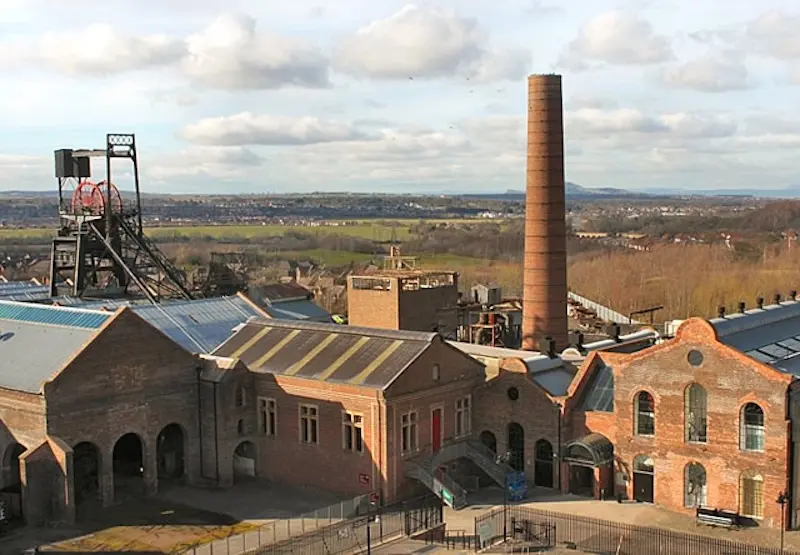
The blog image is Lady Victoria Colliery in Newtongrange (just South of Edinburgh), now the National mining museum. On opening, it was Scotland’s deepest pit, with shafts 500m deep – terrifying!
It was closed in 1981 as part of a pre-emptive strike by Thatcher’s government to cajole the mining union into a fight. Nb. Lady Vic was 90 years old and had exhausted the easily accessible coal, whereas most pits marked for closure at this time were still viable. In addition, the government prepared for the fight by stockpiling energy supplies, reducing freedom to protest laws, reduced social security protections, training riot squads and a media blitz to turn public sentiment against union leaders (this all sounds grimly familiar in 2025).
The inevitable confrontation came to a head in 1984, after a year of conflict, the unions capitulated and this essentially marked the beginning of end of mining (and indeed heavy industry) in the UK. Within a decade, the UK manufacturing backbone had been replaced with a service industry, centred around the golden streets of London. It should also be noted that the media (particularly the prestigious BBC) were implicit, cherry picking and misrepresenting reports to show the striking miners as violent thugs (when often it was the police riot squads who initiated clashes).
Now, much of this washed over me (too busy being a kid). The next 20 years however were a drip feed of awareness, questioning and ultimately a burning desire to challenge the powers and systems that perpetuate social injustice.
It started with seeing first hand, the desolation (financial and social) suffered by the mining towns and villages in the area. While the TV and papers spoke of ‘loads of money’, GDP growth and economic miracles, that was not the reality for whole industries and whole areas. These were proud, resilient communities who had powered the nation through their hard, dangerous work, now left behind. No jobs, no future, just boredom, depression, economic hardship, boarded up shops, social problems, crime and bitterness (towards the establishment but also against those who betrayed their community). nb. My home village is 10km South of Lady Vic, not a mining village, in a different school catchment – so by virtue of geography, we avoided the worst impacts of this hardship.
In time, I started questioning, how can the economy be thriving when all these communities are dying a slow, miserable death?
This sent me on a journey into systems thinking, complexity theory and ultimately to co-founding a company aimed at enabling community focused companies providing alternatives to exploitative, neoliberal capitalism.
So there you go, that is my burning WHY.
I shared this at the recent local hub with a question for the cohort (mainly climate activists/professionals).
As we battle a broken planet and the entrenched power of the fossil fuel industry (with it’s intertwined systemic claws), how can we ensure that the energy transition will be just, that decent, hard-working communities in places like the Hunter and Latrobe Valleys are not discarded to the social and economic scrapheap?
Even that is a too narrow and privileged view, how can we ensure that communities across the globe are included in the next Industrial Age?
Get up, stand up…
Ewan
